

Key Points
- Leaks in fire protection systems can compromise safety and generate unnecessary costs.
- Technologies such as tracer gas and geophones allow for leak detection without invasive work.
- Regular maintenance of the fire protection system is key to preventing future problems.
- Ignoring leaks can lead to structural damage and conflicts with insurers.
- Acting immediately upon signs of a leak can save you time and money in the long run.
Data updated in September 2026 — Information verified with internal data from Telefuga and real reviews from Google Maps.
Detecting and Repairing Leaks in Fire Protection Systems
Leaks in fire protection systems are a critical problem that can compromise both safety and the integrity of any facility. If you are reading this, you are likely facing an urgent situation. At Telefuga, we understand the concern this generates, especially when it comes to fire protection for buildings and commercial premises.
What are leaks in fire protection systems?
Leaks in fire protection systems occur when water escapes from the pipes or connections of systems designed to combat fires, which can cause structural damage and jeopardize the system's effectiveness. Often, these problems are not visible and can remain hidden for extended periods, complicating their detection and repair.
Common Causes of Leaks
- Corrosion: Pipes can deteriorate over time and due to environmental conditions.
- Joint failure: Connections between pipes can loosen and cause leaks.
- Seismic movements: Can cause displacements in pipe connections.
Consequences of Ignoring Leaks
Failing to act in the presence of leaks can lead to serious consequences:
- Structural damage: Moisture can affect the building's structure, with the risk of collapses.
- Health: Moisture conditions can promote mold growth, affecting air quality.
- High costs: The longer you wait, the more expensive the repair will be. The water bill can increase significantly.
Effective Methods for Leak Detection
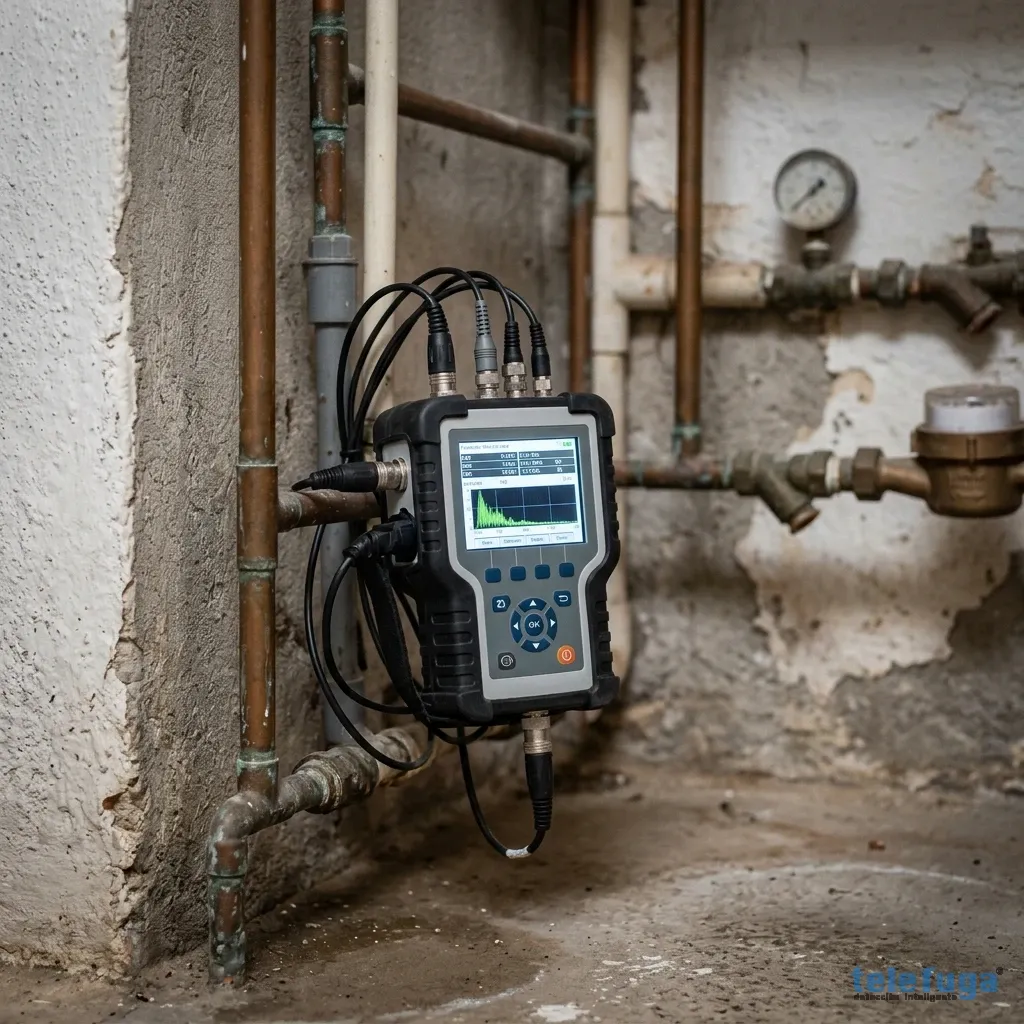
At Telefuga, we use advanced technology to detect leaks without the need for invasive work.
- Tracer Gas: A method that involves injecting a non-toxic gas into the pipes. Detecting the gas outside identifies the leak's location.
- Geophone: This tool allows us to listen to the sound of water leaking, enabling us to locate the leak with great precision.
- Thermography: We use thermal cameras to detect temperature changes that may indicate the presence of leaks.
Comparison: Traditional Approach vs Telefuga Technology
| Method | Traditional | Telefuga |
|---|---|---|
| Invasiveness | High | Low |
| Time to locate | Days | Hours |
| Repair Cost | High | Low |
Step-by-Step Guide: How to Detect Leaks in Fire Protection Systems
- Visual inspection: Look for obvious signs of moisture or corrosion in pipes and connections.
- Meter review: Check the water meter; if it continues to register consumption without apparent reason, it indicates a leak.
- Technology evaluation: If you suspect a leak, do not hesitate to contact us for detection using tracer gas or geophone.
- Repair: Once located, we will proceed with the repair. Our approach is to resolve the problem definitively.
Preventive Maintenance for Fire Protection Systems
To avoid future problems, consider implementing a regular maintenance plan:
- Quarterly reviews of installations.
- Replacement of worn joints and fittings.
- Thorough inspections of the system every year.
Related Regulations and Legal Risks
It is crucial to be aware of the current regulations regarding fire protection installations:
- UNE Regulations: Ensure that your installation complies with the relevant UNE regulations governing fire protection systems.
- Insurance: Lack of maintenance can result in problems with the insurer in case of claims.
FAQs about Leak Detection in Fire Protection Systems
- How can I know if I have a leak in my fire protection system? If you notice an unusual increase in your water bill or signs of moisture, contact a professional.
- Is there a non-invasive method to detect leaks? Yes, we use technologies such as tracer gas and geophone, which locate the leak without damaging your installations.
- How long does it take to repair a leak? The time will depend on the complexity, but we can generally solve the problem in a few hours.
Conclusion
Do not let leaks in fire protection systems become a serious problem. Act quickly to protect your investment and the safety of your space. At Telefuga, we are ready to help you locate and repair any leak efficiently and without invasive work.
Contact us today at 693 888 444 or send an email to [email protected].


