

Leak Detection in Heating Systems
Heating, radiators and closed circuits without construction work. Infrared thermography and tracer gas to narrow down the leak point.
If we do not locate the leak, we do not charge for the diagnosis.
What does the service consist of?
A leak in the heating circuit is one of the hardest problems to detect: the pipes are hidden inside walls, false ceilings or under the floor. At Telefuga we use infrared thermography and tracer gas to locate the leak point without destructive works.
Is your boiler constantly losing pressure?
If you need to top up your boiler's pressure every few days, there is probably a leak in the heating circuit. Do not wait for the water to damage the structure or for the boiler to fail from running on low water.
Signs of a leak in the heating system
- Pressure drop in the boiler: you need to top up water frequently.
- Damp stains on walls or floors: near radiators or concealed pipework.
- Radiators that do not heat: one or more radiators stop working.
- High gas bill: the boiler works harder than normal to compensate.
How it is located
With the system cold we pressurise the circuit to verify the pressure drop; in installations with several circuits, each one is tested separately.
Thermography with the system hot shows the route of the pipes as warm lines; a leak interrupts that line or creates a diffuse patch. Thermography sees temperatures, not the leak itself: it needs real thermal contrast, loses effectiveness in deep pipes and produces false positives (thermal bridges, beams, uninsulated areas), so it is used to orientate, not to mark the point.
The point is located with tracer gas: underfloor heating pipe is plastic and often does not sound, so the circuit is emptied, charged with a mixture of tracing gases and its escape is traced at the surface. The geophone helps to narrow down the location on metal radiator pipework when the circuit is under pressure.
Once located, the floor or wall is opened only in the located area, the section is repaired or replaced, and water-tightness is verified before closing up.
Typical leaks in underfloor heating
Underfloor heating uses cross-linked polyethylene (PEX) or polybutylene pipes beneath a layer of mortar. Typical leaks are accidental punctures (a wall plug or a screw over the route), a joint defect in the manifold that leaks slowly over years, and deterioration of components caused by untreated water.
A patch of floor that is clearly warmer than the rest, outside the normal pattern, can indicate hot water accumulating outside the pipe.
Systems we work on
- Hot water radiators
- Closed boiler circuits
- Concealed wall pipework
- Fan coil systems
- Boilers and manifolds
- Radiator valves and lockshield valves

- Written technical report when the service requires it
- Free phone assessment and no-obligation quote
Main advantages
- No destructive works: the leak point is located without breaking walls or floors to search for it.
- Infrared thermography: visual tracing of the circuit and of thermal anomalies, always confirmed with another technique.
- Water-based heating systems: radiators, boilers, closed circuits and fan coils.
- Repair with minimal opening: opened only in the located area, and water-tightness verified before closing.
- The prior quote is free and without obligation
How We Work, Step by Step
- 1
Pressure diagnosis
We verify the pressure loss in the heating circuit and analyse the whole system (boiler, radiators, valves) to confirm the leak.
- 2
Infrared thermography
We scan walls and floors with thermal cameras to display the route of the heating pipes and detect the thermal anomalies that reveal the leak.
- 3
Tracer gas
We empty the circuit, charge it with the tracing gas mixture and follow the route with the detector to the peak concentration.
- 4
Minimal opening and water-tightness test
Opened only in the located area, the section is repaired and the pressure is checked before closing.
What our customers say on Google
""
Frequently Asked Questions
Request a no-obligation quote
24-hour phone service. We will give you the visit date when the service is confirmed.
Contact us
Fill out the form and we will respond shortly.
Related Articles
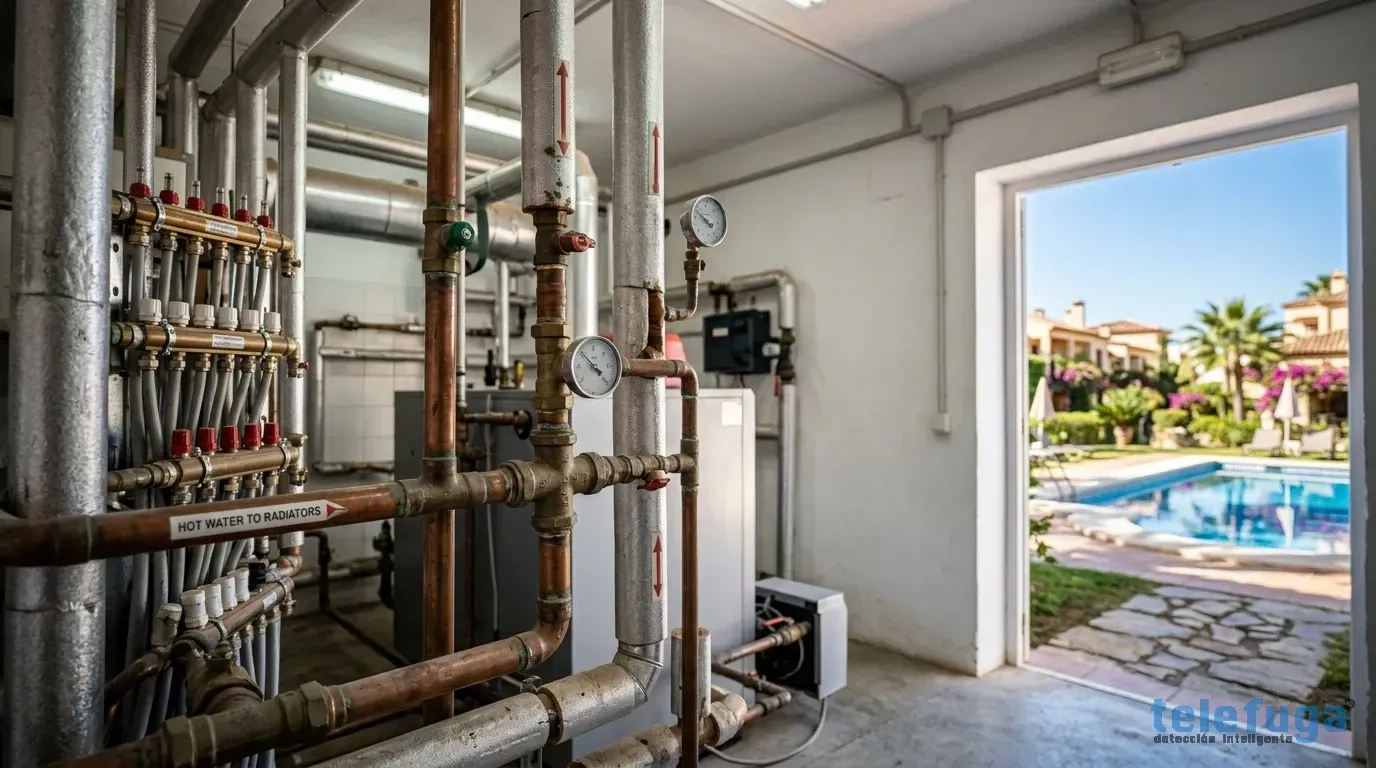
Heating and Radiator Leaks: Symptoms, Detection and Repair with Minimal Opening
Loss of pressure in heating, damp stains and cold radiators can indicate a leak. It is located with thermography and a g...

Thermal camera for leak detection: what it sees and what it doesn't
A thermal camera shows temperature differences on surfaces. It complements the geophone and tracer gas for hot water and...
Service areas
We work in the provinces of Valencia, Alicante, Murcia, Albacete and Almería. For other areas, please ask us.